

The arrival of a newborn in 2026 brings immense joy and significant exhaustion. Most parents quickly realize that sleeping when the baby sleeps is rarely possible. This reality leads many families to seek professional overnight help for their recovery. However, the choice between a postpartum doula vs night nurse can be quite confusing.
Both professionals provide relief during the sensitive fourth trimester period. They help parents navigate the challenges of infant care and sleep deprivation. Yet, their methods and primary goals differ in very specific ways. Understanding these nuances is essential for a smooth transition into parenthood.
Choosing the right professional depends on your specific household needs and goals. Some families require medical-grade observation for a premature infant or twin birth. Others need emotional guidance and physical support to recover from a difficult labor. By evaluating the core differences, you can secure the support that fits your lifestyle.
What is the Primary Difference Between These Roles?
The term night nurse is often used broadly by many new parents. In many regions, a night nurse is a Registered Nurse or Licensed Practical Nurse. They are trained to monitor the baby’s health and handle medical equipment. Their primary objective is to ensure the infant is safe throughout the night.
A postpartum doula acts as a professional support system for the recovering mother. They are trained in maternal mental health, lactation support, and physical healing. While they care for the baby, their lens is much wider than just the nursery. They provide education that empowers parents to feel confident after the doula leaves.
The postpartum doula vs night nurse distinction often comes down to who is served. The night nurse is there specifically for the baby’s clinical needs. The postpartum doula is there for the well-being of the entire family unit. This difference influences everything from the tasks performed to the emotional atmosphere.

How Does a Night Nurse Focus on Infant Care?
A night nurse typically stays in the nursery with the newborn child. They prioritize the baby’s feeding, changing, and sleep hygiene during the overnight hours. If the baby has medical issues, the nurse monitors vital signs carefully. Their involvement with household chores or maternal emotional processing is usually very minimal.
How Does a Postpartum Doula Support the Mother?
Postpartum doulas are known for their philosophy of mothering the mother during recovery. They might fold baby laundry or prepare light snacks for the healing parent. They observe the mother for signs of postpartum mood disorders and offer listening. Their goal is to foster a calm environment where the mother heals effectively.
Postpartum Doula vs Night Nurse: Comparing the Scope of Services?
When comparing a postpartum doula vs night nurse, the scope of care is different. Night nurses usually focus on establishing a strict sleep schedule for the infant. They bring the baby to the mother for breastfeeding or handle bottles. Their role is task-oriented and centered on the baby’s physical development and safety.
Postpartum doulas offer a more flexible and holistic approach to the household. They provide evidence-based information on infant soothing and maternal nutrition during 2026. They help siblings adjust to the new baby and assist with light organization. Their presence is designed to lower the overall stress level of the home.
The following table summarizes the typical service boundaries for each professional role:
| Feature | Night Nurse | Postpartum Doula |
| Primary Focus | Infant health and sleep | Maternal recovery and family bonding |
| Medical Training | Clinical or Nursing background | Non-medical and Holistic certification |
| Household Tasks | Rarely performed by professional | Light chores and meal prep included |
| Feeding Support | Follows a specific feeding plan | Offers lactation and positioning guidance |
| Emotional Support | Minimal and Task-oriented | Extensive and Empowerment-focused |
These roles can sometimes overlap, but their training dictates their priorities. A night nurse may monitor a baby with reflux or breathing issues. A postpartum doula may suggest lifestyle adjustments to reduce family stress levels. Both roles are valuable, but they solve different problems for new parents.
Why Professional Postpartum Support is Essential for Health?
Research consistently shows that professional support improves health outcomes for families. Postpartum depression affects approximately 1 in 7 women in the United States today. Studies indicate that mothers with consistent support report lower levels of anxiety. This support can come from either a nurse or a doula.
Sleep deprivation is a leading risk factor for postpartum mood disorders in 2026. A night nurse can provide the continuous sleep parents need for stability. However, the emotional coaching provided by a doula addresses the root of anxieties. Statistics suggest that mothers with doula care are 15% more likely to continue breastfeeding.
Physical recovery is also accelerated when professional help is present at home. Mothers who have undergone a Cesarean section need extra assistance with mobility. A postpartum doula vs night nurse comparison shows doulas provide more physical help. This reduces the physical strain on the body during the first month.

Impact on Long-Term Infant Development
Professional caregivers help establish healthy sleep patterns from the very beginning. This consistency benefits the infant’s brain development and overall growth during infancy. When parents are well-rested, they interact more positively with their newborn child. These early interactions are crucial for secure attachment and emotional health.
Reduction in Parental Stress and Anxiety
Having a professional in the home reduces the fear of the unknown. New parents often worry about small changes in their baby’s behavior or health. A nurse or doula provides immediate answers and reassurance to the parents. This expert presence allows the family to enjoy the newborn period more fully.
How to Determine Which Professional Best Fits Your Household?
To make the right choice, you must first assess your medical situation. If your baby has complex medical needs, a night nurse is safer. They can monitor vitals and administer medications with clinical and professional precision. Families with newborns coming home from the NICU often prefer this oversight.
If your primary goal is learning how to transition, a doula is better. A postpartum doula teaches you how to bathe, soothe, and bond daily. They provide the “village” that modern society often lacks for new families. They are ideal for parents who want a partner in the recovery.
Budget and timing also play roles in the postpartum doula vs night nurse decision. Night nurses often charge higher hourly rates due to their medical licenses. Doulas may offer packages that include both daytime and overnight support options. Consider how many weeks of help you need for your family’s recovery.
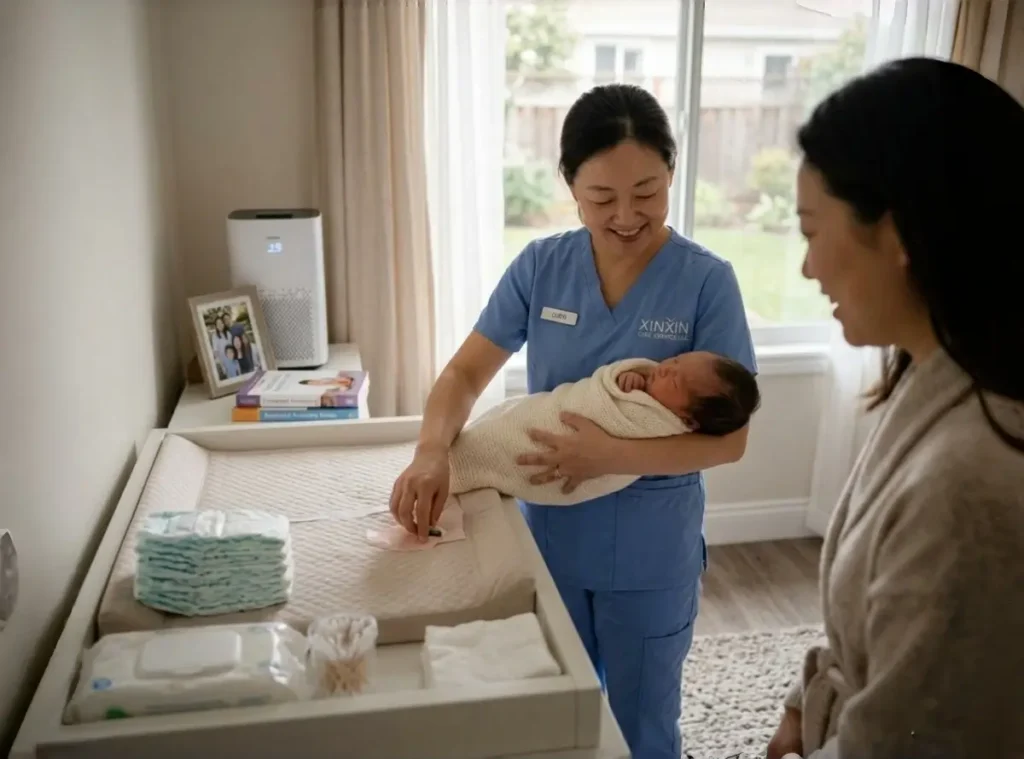
When evaluating your options, consider the specialized care found through an overnight postpartum doula at Xinxin Care. These professionals are trained to handle the delicate balance of infant care and maternal support. They offer a bridge between clinical safety and the nurturing environment every mother deserves.
Choosing a service like Xinxin Care allows for a customized recovery plan. Their doulas understand the importance of sleep for the mother’s mental health. They also prioritize the baby’s safety and successful feeding habits every night. This dual focus makes them a top choice for families in 2026.
Selecting the right professional is about more than just checking a box. It is about finding a person who fits your family’s unique dynamics. A high-quality provider will offer a consultation to ensure a good personal match. This ensures that the support you receive is effective and very comfortable.
Summary
The choice in the postpartum doula vs night nurse debate depends on your priorities. Night nurses offer clinical security and medical monitoring for the newborn baby. Postpartum doulas provide holistic support that focuses on maternal healing and family education. Both roles significantly reduce sleep deprivation and improve the health of the entire household.
FAQ
1. Is a postpartum doula the same as a baby nurse?
No, they are different roles because a baby nurse focuses exclusively on the infant. A postpartum doula supports the entire family unit and the mother’s physical recovery. A baby nurse rarely assists with household tasks or the mother’s emotional needs.
2. Does insurance cover the cost of a night nurse?
Insurance coverage depends on medical necessity and your specific policy in 2026. Most standard night nurse services are paid out-of-pocket by the family. Some Health Savings Accounts may allow for reimbursement with a letter of medical necessity.
3. Which professional is better for breastfeeding support?
A postpartum doula is usually better for breastfeeding support due to specific training. They help with positioning, latching, and maintaining a healthy milk supply for the mother. While some nurses have this knowledge, a doula’s role prioritizes these feeding goals.
4. Can I hire both a night nurse and a postpartum doula?
Yes, you can hire both if your budget allows for specialized support. Some families use a night nurse for medical monitoring during the first weeks. They then transition to a doula for long-term guidance and household management.
5. How many hours does an overnight doula typically work?
Most overnight doulas work shifts ranging from 8 to 12 hours each night. This allows parents to achieve a full night of restorative and deep sleep. During this time, the doula manages infant care and light domestic tasks.
Reference Sources
American Pregnancy Association: Postpartum Care and Support Services
DONA International: The Role of the Postpartum Doula in Family Wellness
Postpartum Support International: Understanding Postpartum Mood Disorders and Support Systems
National Institutes of Health: Impact of Social Support on Postpartum Depression and Maternal Health
Mayo Clinic: Infant Sleep and Newborn Care Strategies for Parents in 2026